The Hornet theoretically has great brakes for a 1930’s car, they are hydraulically actuated and they are a decent size for the weight of the car, however there is a fundamental difference between “modern” drum brakes and ones of the 30’s. The hornet like my Citroen Traction Avant (first released in 1934) has a fixed point where the brake shoes pivot whereas in modern brakes the pivot floats so just having the shoes radiused to the inside diameter of the drum will give you 100% contact, job done. You could get lucky with the fixed pivot and it’ll work but more than likely you will not be that lucky. There are three ways to fix this.
- Drive the car for thousands of miles and eventually the brakes will bed in, just try not to hit anything while you are doing it.
- The fixed pivot sometimes can be adjusted but as you cannot see inside the drum it’s a bit difficult to get the clearances right, maybe if you had a spare drum that you could cut a hole in or a bracket that bolts onto the hub follows the profile of a drum, then with a feeler gauge and some time it could work.
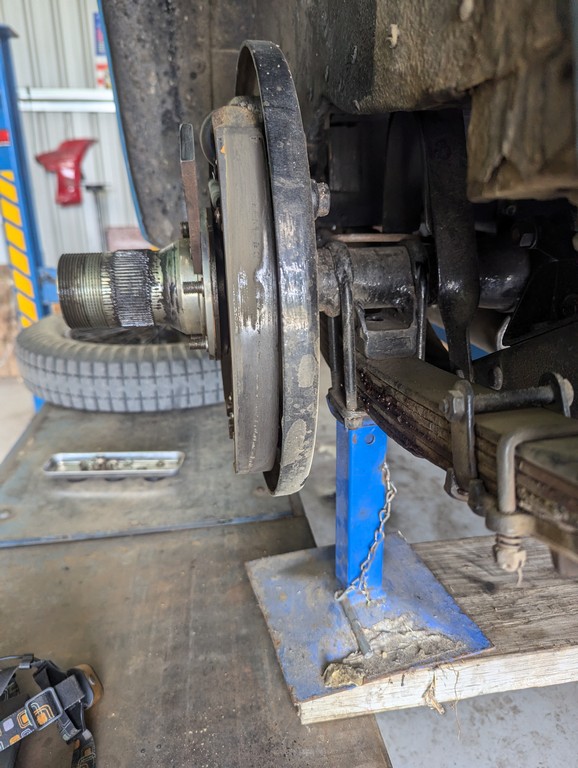
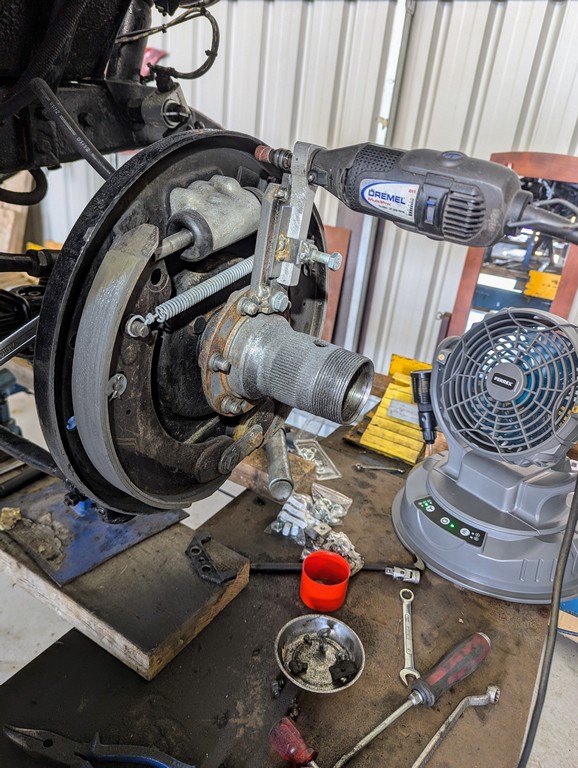
- What I did was make a jig that bolted to the hub, I attached a Dremel fitted with a Sanding drum. The jig was adjustable for diameter, the diameter was set to the inside diameter of the brake drum this meant a fare bit of F-ing around. Wear face mask as I don’t think you should breath this stuff in even though it’s not asbestos anymore, I also had a portable fan blowing the dust away from me. Start by adjusting the shoes out until the sander touches and sand the high spots off a little at a time until you have sanded the complete shoe. Have a cold beer, well done.
Share with friends: