Making it Stop

The Hornet theoretically has great brakes for a 1930’s car, they are hydraulically actuated and they are a decent size for the weight of the car, however there is a fundamental difference between “modern” drum brakes and ones of the 30’s. The hornet like my Citroen Traction Avant (first released in 1934) has a fixed point where the brake shoes pivot whereas in modern brakes the pivot floats so just having the shoes radiused to the inside diameter of the drum will give you 100% contact, job done. You could get lucky with the fixed pivot and it’ll work but more than likely you will not be that lucky. There are three ways to fix this.

  • Drive the car for thousands of miles and eventually the brakes will bed in, just try not to hit anything while you are doing it.
  • The fixed pivot sometimes can be adjusted but as you cannot see inside the drum it’s a bit difficult to get the clearances right, maybe if you had a spare drum that you could cut a hole in or a bracket that bolts onto the hub follows the profile of a drum, then with a feeler gauge and some time it could work.
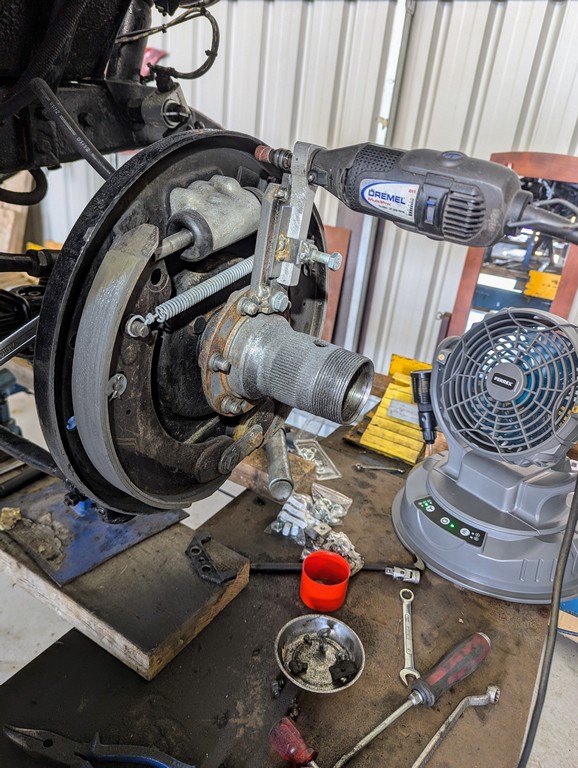
  • What I did was make a jig that bolted to the hub, I attached a Dremel fitted with a Sanding drum. The jig was adjustable for diameter, the diameter was set to the inside diameter of the brake drum this meant a fare bit of F-ing around. Wear face mask as I don’t think you should breath this stuff in even though it’s not asbestos anymore, I also had a portable fan blowing the dust away from me. Start by adjusting the shoes out until the sander touches and sand the high spots off a little at a time until you have sanded the complete shoe. Have a cold beer, well done.
Before radiusing with the Dremel less than 50% contact

Death by a thousand cuts

As I’ve mentioned earlier the Hornet had many flaws when I bought it, apart from not stopping very well the car was a real handful on the road, so after a few close calls I started trying to find the main cause and to be honest there was no main cause just a lot of smallish ones.

  • It seemed to not like turning right and I found that the left rear wheel had a different offset so it had narrower track on that side, I assume that this wheel was meant to be the spare so I swapped them around.
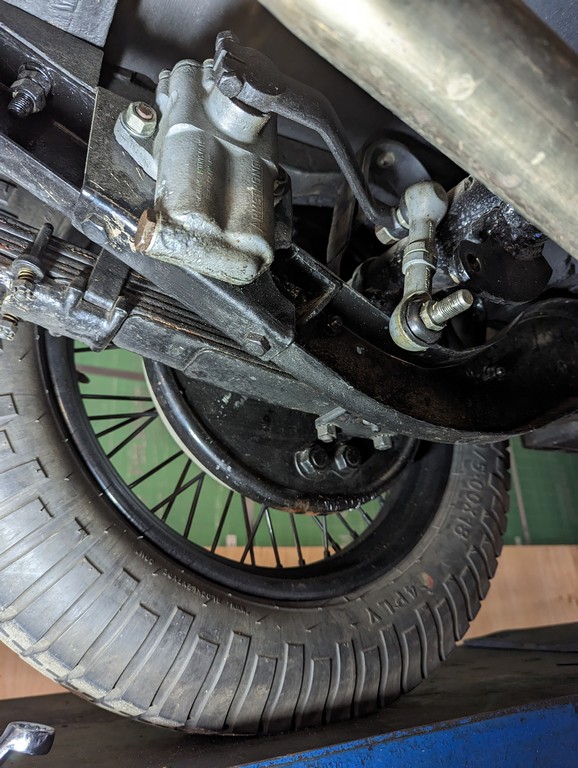
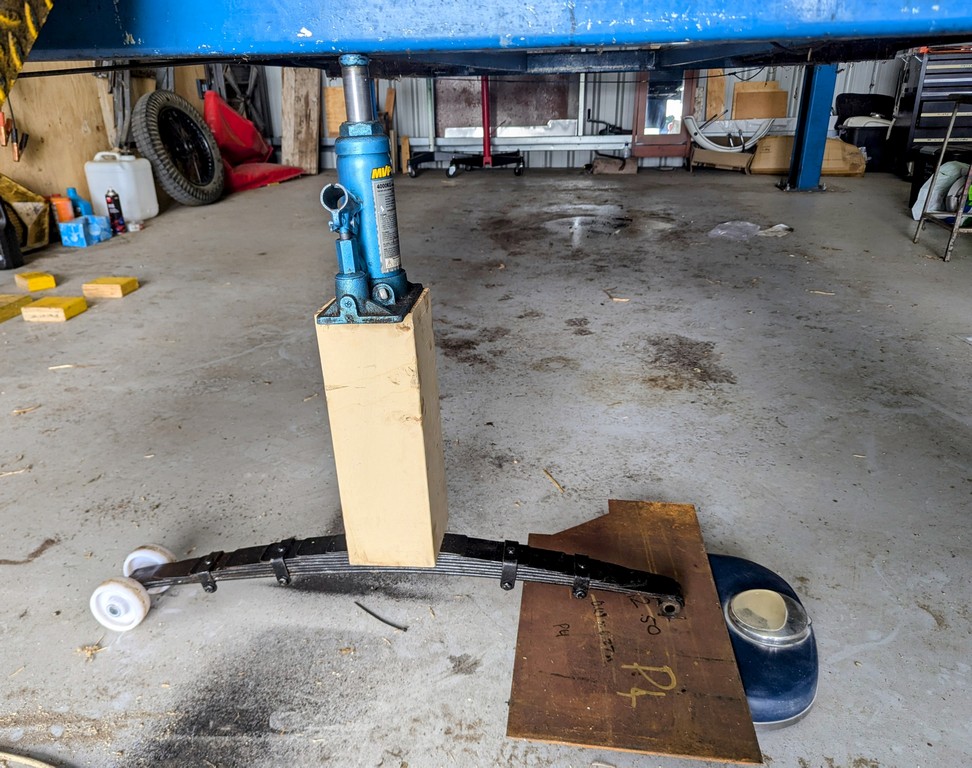
  • After testing (see Heath Robinson tester below) it appeared that the rear springs had different heights and rates, had them rebuilt.
  • The rear dampers were Armstrong lever arm probably from a Morris Minor, one was virtually immovable the other was the opposite, I replaced with new ones…that leaked out of the box.
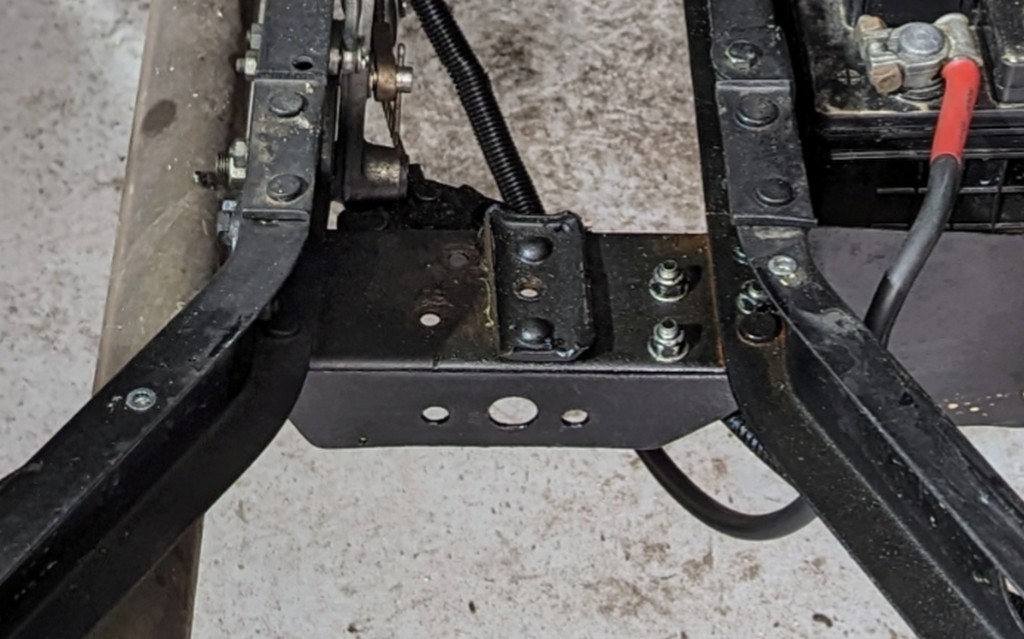
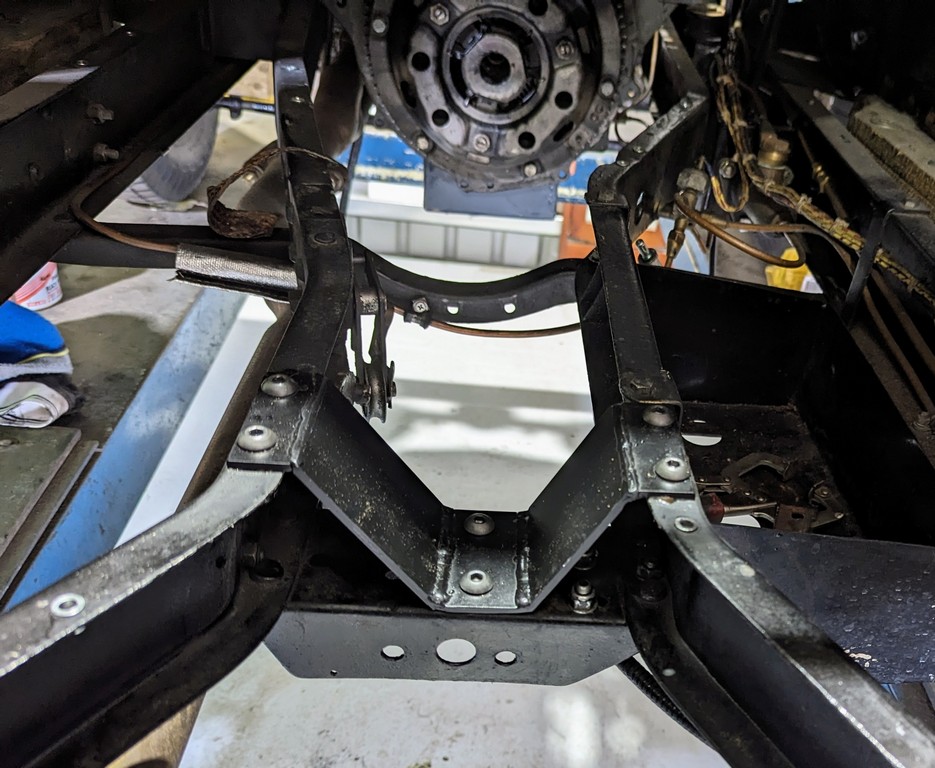
  • Long ago some one had cut off a chassis brace making the chassis twist more as the cruciform wasn’t joined in the middle, made a new brace.
  • Moving to the front, the front axle has a bend in it…still to do.
  • Front axle was mounted back to front, putting it the right way around improved things as kingpin inclination is now in the ballpark but not the same on both sides because of the previous point.
  • Front springs like the back ones are odd, they will be rebuilt while we wait for the crankshaft to be built.
  • the front shackles had been modified, they have now been unmodified.
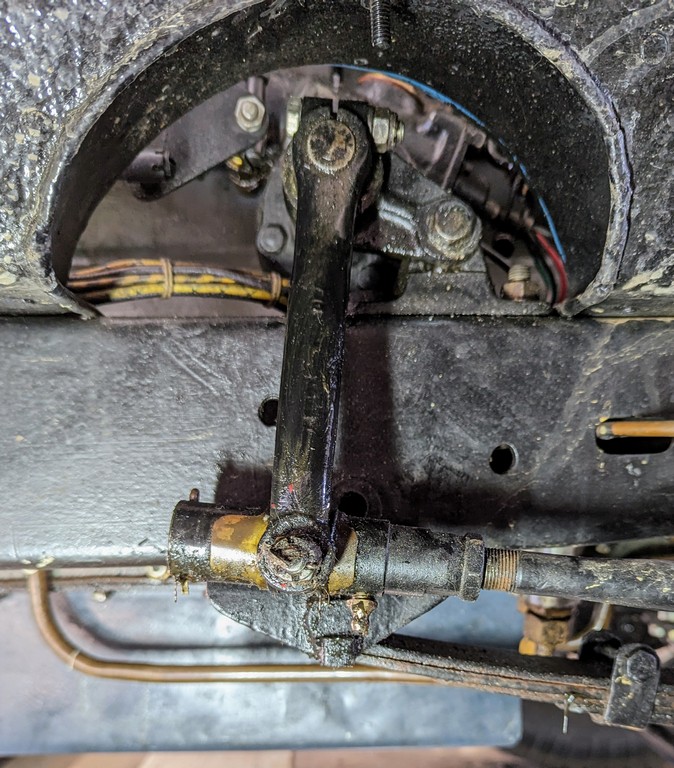
  • The drop/pitman arm was from a different car and was twice as long as original which I suppose was supposed to give it sharper steering, I have found an original and it’s now fitted.

The Bakes or Lack Thereof

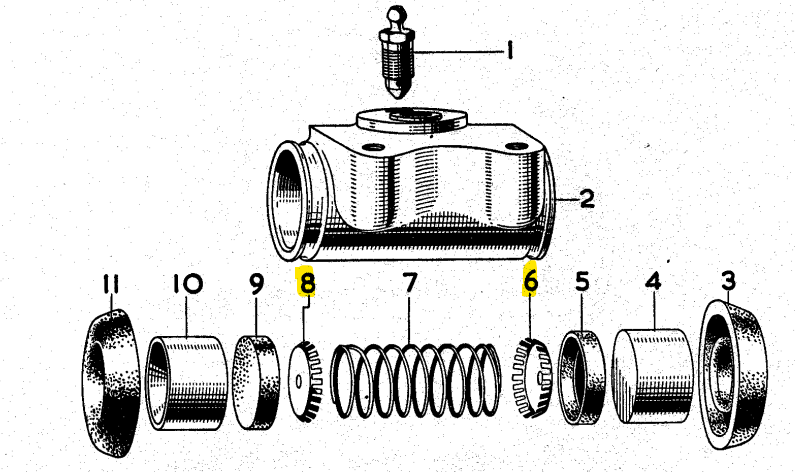
The very first entry (June ’21) in my workshop diary for the Hornet was to replace the cups and boots on the brake slave cylinders as they were leaking and at the same time I inserted modern oil seals on the rear axles as the rear brakes were covered in oil. As it happened this was a complete waste of time as there were parts missing (parts 6 & 8) so the brakes continued to leak

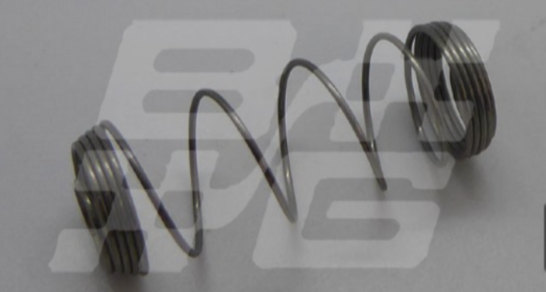
Times have moved on so now you can use the following instead of the the spring and the two missing bottle caps. Also I have found that the first series of Chevy Corvette rear wheel cylinders have the same diameter and piston arrangement plus they are very cheap I bought some ($17 each for a complete wheel cylinder) and ratted the springs, cups, boots and pistons.

Also the modern oil seals placed in the rear axle tubes had been running on what I realised later were wonky axles so they still leaked and destroyed another set of brake shoes. Luckily Hornet’s very close relative MG has a community that had a solution.

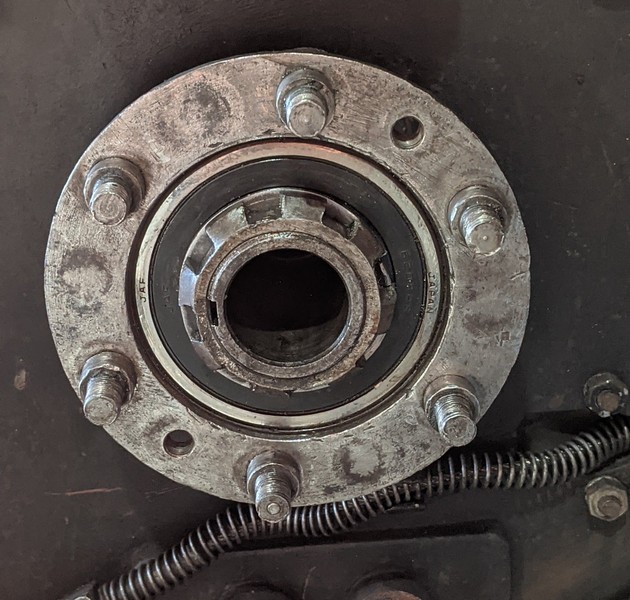
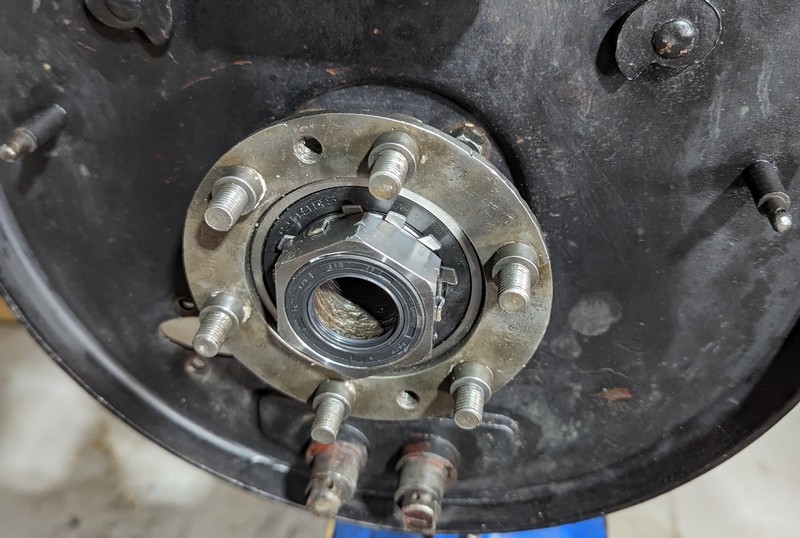
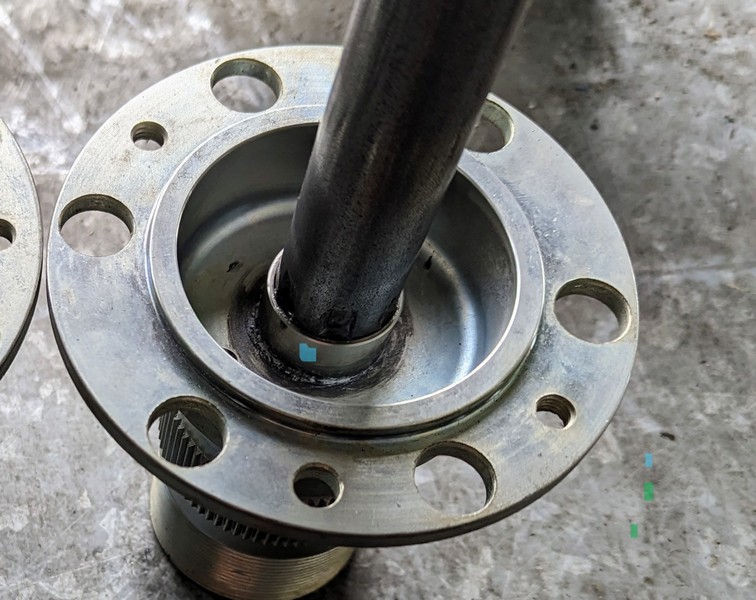
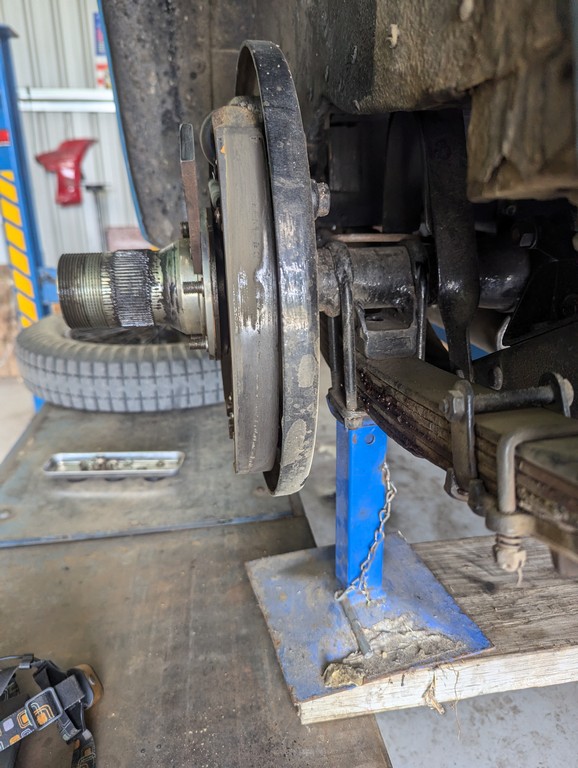
What were originally a weird castellated nut (first pic) that held the rear hub on became a hex nut (second pic) with an oil seal in the centre and the now new axles and hubs (again MG) had a stainless steel sleeve (marked blue) epoxied in place for the seal to run on.

So after about a year the brakes and the back axle don’t leak but the brakes are still crap at their actual job of stopping. To be continued.