LED Headlamps, are we there yet?

Generally old cars don’t have great electrics, luckily Vincenso Lancia used Bosch so at least electricity is the end product rather than smoke produced by that well known English brand.  The Bosch generator like most of the Vintage era put out about 80 Watts, so that is my power budget.  Unfortunately the Lambda is handicapped with a dud vac tank so has a Facet fuel pump sucking 18 Watts.

Here is the list of stuff that would be running while travelling at night.

Load Quantity Power Total
Headlamps 2 35W 70W
Fuel Pump 1 18W 18W
LED Tail Lamps 2 2W 4W
Total 92W

So I’m 12 Watts over budget if the Generator was perfect, this is after I had already replaced the headlight bulbs with halogen ones saving 10 Watts and Stuart the previous owner replacing the tail lights with LEDs saving  another 12 Watts.  The obvious answer would be to get the vac tank working…. or LED Headlamps?

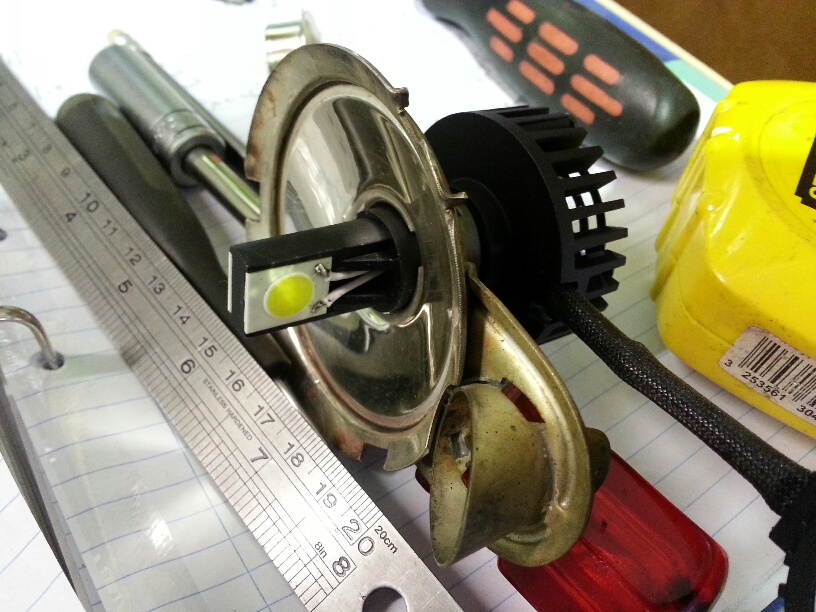
Some new cars now come with LED headlamps so they would be perfect for an old car with not much power to spare…. Well yes and no.  Here is a picture of one I prepared earlier.
20150130_170419_resized

Picture shows LED mounted in part of the Bosch reflector, would have been a perfect fit if that heat sink was not sticking out the back.

So the problems are

  1. No room for the fan/heat sink.
  2. Nowhere for the heat to go as headlight shells are not ventilated.

LEDs although much more efficient that incandescent bulbs still produce heat and if the heat cannot get away they die early.

I think the real problem here that I do not have a vintage brain, as I’m sure in the day if your battery was going slowly flat it was time to pull over and have a kip and take off again in daylight, problem solved.

Nevertheless, a vac tank may allow me to see the light without the sleep.

Tech for old vehicles

This week I at last received the magneto back for the 1928 Douglas, it has been rewound, remagnetised and repainted so I went about refitting it and of course had forgotten how the re-engage the gears so had to go back to first principles, well really.

Being a horizontally opposed twin there is a bang every half magneto revolution so first off must find which plug is firing, usually this involves electrocuting yourself but as I am a chicken I do it differently.  I have an electronic magneto buzzer, it was designed to time aircraft so can do two magnetos but does one nicely, a byproduct is that when the points open the appropriate hi-tension lead tingles (tech term for mild electric shock) so not only tells you the points have just opened but which plug is firing.  So having already stuck my thumb over a plug hole to find out which one was on compression and lined up the file mark on the flywheel the rest was pretty simple.  These timers are available on the net, the one I use is from http://www.brewingtontech.com/ but now only available as a kit however these ones looks good http://www.skygeek.com/magneto-timing.html and shipping to Australia is only $15 USD they have single and duel magneto models with and without sound (you want sound).

20150124_162121_resize_20150124_162238

While on the subject of useful stuff.  I use an electronic inclinometer rather than a degree wheel (see picture below) these are about $32.00 AUD on ebay and as they are magnetic they stick anywhere to the rim of the flywheel, when at TDC hit the zero button and move the flywheel and the box is giving you a direct measurement of angle, works great for engines with no timing marks.

20150123_171005_resize_20150124_162238


Lastly I had a tip from Colin a friend of mine who had to make some gaskets for an overdrive unit.  He just put the part, mating surface down on his scanner and printed out the scanned image, he used thin gasket paper in his printer then just cutout the picture, you probably should scan and print a ruler first and check that it prints to scale.  A photocopier may be OK as well but I take no responsibility for what the gasket paper might do to it!

Cheers

Mark

Paint it black

Week started well with the local club’s Breakfast Club click here for details.  This event we run on the second Sunday of each month and generally get 50-90 cars of all sorts, starts 7:30 ends 10:00 so it does not mess with your day.

Andrew’s Cox and McDougall visited on different days to inspect the Lambda and I think it passed the muster.

Thursday was a rainy motoring lunch so nothing the other side of the year 2000 turned up, Bob did drive the Alfa 156 that although not vintage was fitted with tyres that gave it equivalent grip.

Thursday evening went to Peter’s celebration of 50 years ownership of the 30/98 Vauxhall (OE 23?) lovely two wheel braked car and a great night with old cars, wine, friends and particularly well bbqed chipolatas   I think most early series cars are better looking than those that followed, Lambdas included, in the case of 30/98’s the inclusion of front brakes just made things more complicated, added to the unsprung weight and I’m not sure if retardation was much improved.

Friday I attempted to finish the interior colour change on the Lambda but thought better of doing the passenger door trim as we were going to the VSCC picnic that night and was not sure if I should use Sue as a colour fastness tester, so colour mostly changed.  Also this time followed instructions and used gloves, might start wearing them all the time and save some hand cleaner.

20150115_161219_resized

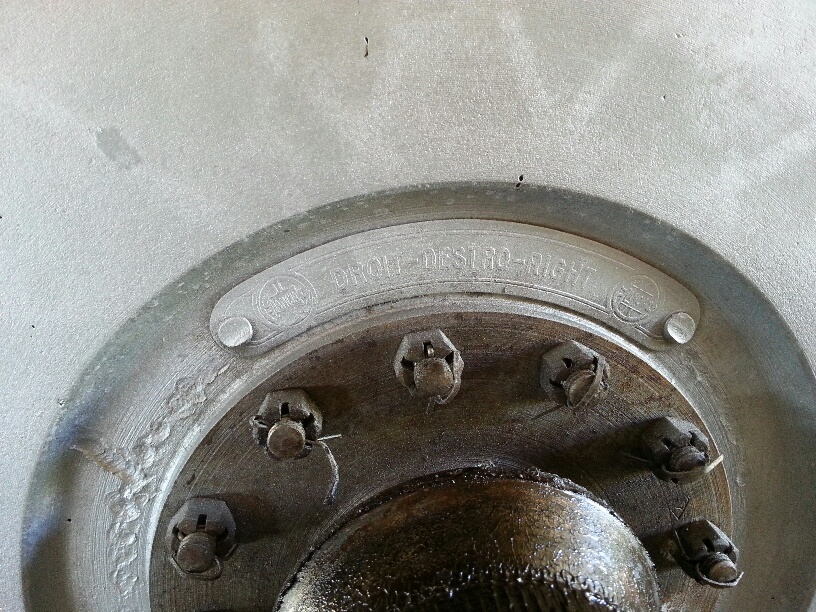
Lastly I have attached a photo of the Lambda brake drum, as you can see it’s marked RIGHT …..Why? This is not a test I just do not know why, any suggestions?

20150112_161129_resized